How to Choose the Right Enamel Cookware Production Line
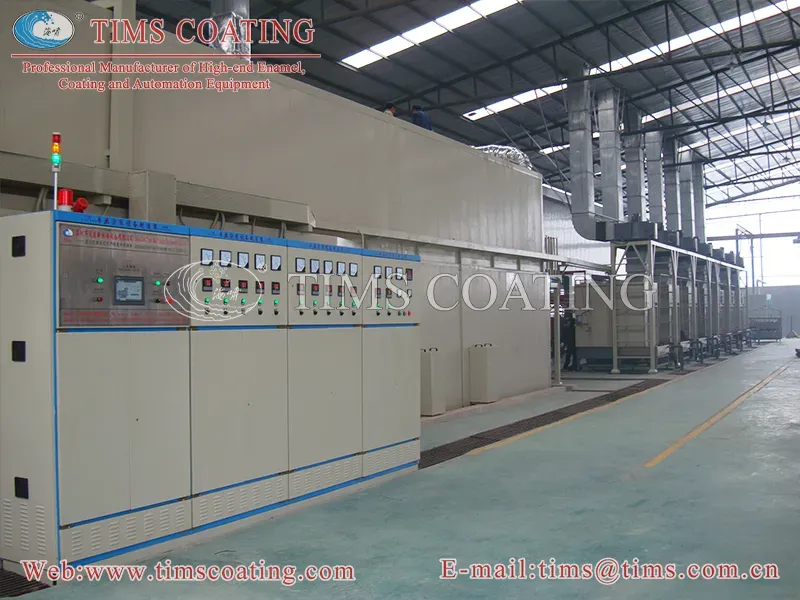
The global demand for high-quality, non-toxic, and durable kitchenware has placed a significant focus on advanced manufacturing technologies. Among these, the enamel cookware production line stands out as the backbone of the industry, enabling manufacturers to fuse the strength of metal with the chemical resistance of glass. Selecting the right system is not merely a matter of purchasing equipment; it is a strategic decision that affects product longevity, brand reputation, and operational profitability. A professional production setup must balance high-performance coating application with energy efficiency and precision control to meet rigorous international standards such as FDA and ISO 12944.
In this comprehensive guide, we will explore the critical technical parameters, material considerations, and automation features that define a world-class production system. Whether you are scaling up an existing facility or establishing a new plant, understanding the synergy between pre-treatment, electrostatic application, and high-temperature curing is essential for achieving a flawless, glossy finish that consumers desire.
Technical Components of a Modern Enamel Cookware Production Line
A sophisticated enamel cookware production line is a multi-stage ecosystem designed for precision. The process begins with advanced surface preparation, typically involving automated grit blasting or chemical pre-treatment. This stage is crucial because the adhesion of the enamel frit depends entirely on the micro-roughness and cleanliness of the substrate. For high-end cookware, such as cast iron pots or carbon steel pans, removing all oxides and oils ensures that the subsequent coating meets ASTM D3359 certification for superior adhesion.
Following pre-treatment, the application stage utilizes electrostatic spray booths or wet enameling systems. Modern lines integrate AI-powered thickness control, allowing for a precise coating range of 0.2mm to 1.5mm. This consistency is vital to prevent chipping and ensuring thermal shock resistance. Finally, the curing stage takes place in gas-fired or electric furnaces, where temperatures are maintained between 850°C and 900°C. A high-quality furnace must offer ±5°C temperature uniformity to guarantee that the glass frit melts and bonds perfectly to the metal surface without warping the workpiece.
Furthermore, the integration of real-time defect detection via hyperspectral imaging has revolutionized quality control. By identifying flaws early in the process, manufacturers can significantly reduce scrap rates. The modular design of these systems allows for the processing of various shapes, from flat lids to deep cylindrical pots, making the equipment adaptable to changing market trends and product designs.
Critical Factors for Efficiency and Throughput
When evaluating an enamel cookware production line, throughput is a primary metric for ROI. Industrial-grade systems often aim for a capacity of 600 to 800 square meters per hour, or approximately 100,000 to 2,000,000 pieces per year depending on the configuration. To achieve this, the conveyor system must be seamlessly integrated with the spray robots and the oven. Heavy-duty overhead conveyors or floor-based power-and-free systems provide the necessary stability to move heavy cast iron components through the intense heat of the firing zone.
Automation plays a decisive role in reducing operational costs. High-level automation, including robotic loading and unloading, can reduce labor requirements by over 80%. These robots are often equipped with vision systems that allow them to handle complex geometries with a positioning accuracy of 0.1mm. This level of precision ensures that even the handles and interior corners of the cookware receive a uniform coating, which is traditionally a challenge in manual spray operations.
Another insight into efficiency is the color change capability. In the modern market, consumers demand a variety of colors and textures, from classic matte black to vibrant glossy reds. A production line equipped with a quick-color-change system can transition between enamel formulas in 10 to 15 minutes, drastically increasing equipment utilization and allowing manufacturers to handle smaller batch orders without significant downtime.
Sustainable and Economic Advantages
Sustainability has moved from a corporate social responsibility goal to a core economic driver in manufacturing. Modern coating systems now incorporate IoT-enabled energy recovery modules. By capturing waste heat from the 900°C exhaust of the firing furnace and redirecting it to the drying oven or pre-treatment tanks, factories can reduce natural gas consumption by up to 20%. This not only lowers the carbon footprint but also significantly cuts the utility bills that constitute a large portion of the production cost.
Environmental compliance is another major benefit. Advanced filtration systems and closed-loop water treatment units ensure that VOC emissions and hazardous waste are kept to a minimum, meeting EN 10209 and other stringent environmental standards. This makes the facility "future-proof" against tightening regulations. Moreover, the durability of the final product—resistant to UV fading, chemical corrosion, and temperatures up to 550°C—ensures that the cookware has a long lifecycle, aligning with global trends toward sustainable consumption.
From an economic perspective, the reduction in material waste is quantifiable. Electrostatic dry powder systems can achieve up to 95% material utilization through efficient recycling systems. Unlike traditional wet methods where overspray might be lost, the dry powder can be reclaimed and reused, directly impacting the bottom line. This efficiency, combined with high-speed production, allows for a rapid return on investment for large-scale manufacturing projects.
TIMS: Your Partner in Advanced Coating Technology
As a leading manufacturer in the industry, TIMS provides comprehensive, turnkey solutions for businesses looking to invest in a high-performance enamel cookware production line. With over a decade of expertise, TIMS has pioneered ultra-flexible production systems that allow a single line to process multiple product models—from water heater tanks to professional-grade cast iron pots. Our technology focuses on maximizing efficiency while minimizing energy waste through patented secondary heat utilization systems.
The TIMS advantage lies in our commitment to precision and reliability. Our equipment for the enamel cookware production line includes state-of-the-art 6-axis painting robots and central PLC management with user-friendly HMI interfaces. This ensures that every parameter, from bath chemistry to curing temperatures, is monitored in real-time for consistent, high-volume output. Whether you require a specialized line for BBQ grills or a standard kitchenware setup, TIMS delivers customized configurations tailored to your specific factory layout and capacity needs.
Our global footprint, including successful projects with major brands like Haier, demonstrates our capability to deliver and install complex systems worldwide. With a full 12-month warranty and lifelong technical support, TIMS ensures that your investment continues to perform at peak efficiency for decades to come.
Conclusion
Choosing the right enamel cookware production line is a multifaceted process that requires a deep understanding of metallurgy, chemical engineering, and automation. By prioritizing precision thickness control, energy-efficient curing, and flexible modular designs, manufacturers can produce world-class cookware that stands the test of time. In an increasingly competitive market, the integration of intelligent monitoring and sustainable practices is no longer optional—it is the standard for excellence.
Ready to Optimize Your Production?
Contact TIMS today for a tailored configuration and consultation on your next coating project.
GET A FREE QUOTEFrequently Asked Questions
Q1: What are the primary benefits of an automated enamel cookware production line?
An automated system significantly improves coating consistency, reduces labor costs by up to 80%, and increases material utilization to nearly 95%. It ensures that every piece of cookware meets high-quality standards without the variability of human error.
Q2: How does the enamel cookware production line ensure coating thickness accuracy?
We utilize AI-powered control systems and high-precision electrostatic spray guns. These tools monitor the discharge rate and electrostatic voltage in real-time, maintaining a uniform thickness between 0.2mm and 1.5mm across the entire surface of the workpiece.
Q3: Can an enamel cookware production line handle both cast iron and steel substrates?
Yes, TIMS designs flexible lines that are compatible with various materials, including carbon steel and cast iron. By adjusting the pre-treatment parameters and furnace firing curves, the system can be optimized for different metallurgical properties.
Q4: What is the average energy consumption of a modern enamel cookware production line?
While power consumption varies based on output, our lines typically range from 50 to 5000 kW/h. However, our patented waste heat recovery systems can reduce the total natural gas or electrical consumption of the furnaces and ovens by approximately 20%.
Q5: How many units can a high-volume enamel cookware production line produce annually?
A standard industrial-scale system can produce between 100,000 and 2,000,000 pieces per year. The modular design allows for future scaling, enabling manufacturers to add additional spray booths or furnace sections as demand grows.